

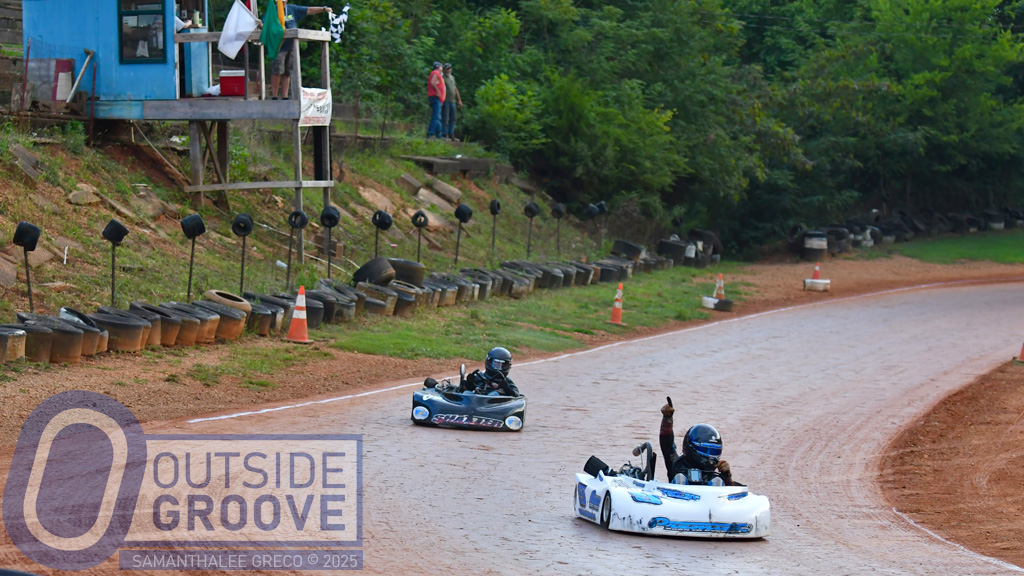
Karting often serves as a fertile training ground for developing the next generation of racers. It fosters essential skills in a budget-friendly environment that translates directly to racing cars. From Lucas Oil Late Model Dirt Series champion Jonathan Davenport to many stars at local short tracks across America, the path to success frequently begins on a go-kart track.
The initial investment to get started in karting ranges from about $2,000 for a used setup to around $20,000 for all-new equipment, including trailer. Each race day typically costs $150 to $300, which figures in pit passes, tire prep, and gas for the kart. These expenses are significantly less than those associated with other oval-track racing options. For example, a used late model can set you back $20,000, and just one tire costs anywhere between $175 to $250 new.
Costs aside, former and current go-kart drivers emphasize that karting is a good place to develop reaction time, problem-solving skills, and confidence.
“On the track, you’re constantly making decisions,” said Alan Cooper, a father of two go-kart drivers and a retired pavement stock car driver himself. “Avoiding collisions, navigating the track, and overtaking opponents all require quick thinking and precision.”
The competitive nature of go-karting also cultivates resilience and sportsmanship. Learning to handle both victories and defeats with grace is a valuable life lesson, particularly for young drivers.
“It’s not just about winning,” said Kimberlee Taylor, a young adult who started her time in karts at age five. “It’s about learning to push yourself, but not too far; to overcome challenges; and to respect the people you race against.”
Unlike most race cars, go-karts lack suspensions, forcing drivers to develop a heightened sense of vehicle feedback.
“Without suspension, you feel every bump and every change in the track surface,” says Mike Hilliard owner of Ashway Speedway, and a driver himself. “This teaches someone to really understand how the kart is responding and to adjust the way you’re driving accordingly.”
This direct connection to the vehicle helps drivers refine their car control skills and develop a natural understanding of vehicle dynamics. The lack of suspension demands precise driving and constant adjustments. Drivers learn to identify optimal racing lines, anticipate changes in track conditions, and manage the kart’s balance. This experience translates directly to higher level racing, where drivers must possess a deep understanding of vehicle handling. However, there are some drawbacks, according to dirt late model driver Tyler Price.
Price said he had to unlearn some of his old karting habits, like bumping a slower kart out of the way — a maneuver that was definitely not advisable in the heavier, faster late models. Then there are the setup differences, with a dirt late model having a complex suspension setup.
“It’s like learning a different language,” Price said. “You know what you want, to an extent, and what a fast car or kart feels like to you.”
Despite that, Price said the lessons he learned in karting proved invaluable.
“I feel like the people who raced in karts have a solid race craft and understand what you should and shouldn’t do when you’re fighting wheel to wheel,” said Price. “You can tell when someone doesn’t have that experience starting in karts; you see some silly moments in the beginner classes.”
Many of today’s racing greats, such as Jonathan Davenport and Kyle Larson, began their careers in karting, demonstrating the sport’s effectiveness as a training ground. For aspiring racers, karting offers a unique opportunity to develop essential skills and build a solid foundation for future success, both on or off the track.

The New Jersey native now calls Tennessee home. Her racing journey began at age eight when she first got behind the wheel of a quarter midget, and she’s been a force in the racing community ever since. With a master’s degree in communications from the University of Tennessee, she’s as determined off the track as she is on it. Whether she’s racing her go-kart or swapping her helmet for a camera to capture the perfect shot, you can always find her in the middle of the action.