
If you’re fed up with the high costs of the full-sized stock car racing, then lawn mower racing might be the answer. You wouldn’t be the only lawn mower racer who once competed in full-size race cars.
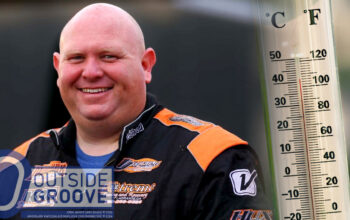
“All of the stock classes are competitive and fast,” lawn mower racer Jason Brown says. “That’s why there has been a lot of crossovers from other forms of racing — late models, stock cars, modifieds, and hobby stocks. The drivers have come over to race with us because it’s cheaper and more relaxing. The racing is competitive on the track, but friendly in the pits.”
Want to start your racing lawn mower journey? You can get a used one, prepared for GP stock (governor prepared) for about $1000. Or, if you prefer to build your own, budget around $1500. Yes, there are more expensive classes, where mowers ride on Hoosier or Burris racing tires, and cost nearly five to 10 times the entry-level mowers, but racers don’t need to start there.
“I bought a Hechinger mower for $10,” Jason says. “It was sitting in a field with a bullet hole in the hood. I won three national championships with it in SP [single cylinder prepared] — it handled like a gem.”
Entry-level racing lawn mowers, such as those in the GP stock class, start with full-size lawn tractors. Most use Briggs & Stratton engines, but a few have Kohlers, with a 3650-rpm limit. Typically, a Peerless 700 five-speed gearbox transfers the power. Racers use different output sprockets from the transmission to the rear axle like stock car racers would use different rear end gears to adjust gear ratios.
Racing lawn mower builders lower the chassis and box them for additional strength. They add plates to mount axles and spindles, which can lower and widen the mower.
The front ends of the tractors are modified to permit adjustments such as caster and camber. Tire stagger and pressures are other points of adjustment.
“It’s like auto racing — a little adjustment like air pressures for the best stagger can help you go the right way,” NASGRASS president Wes Pyburn said.

The rules require lawnmower turf tires, which retail around $60 apiece for the rear and $40 for the front. Competitors say they can last for two seasons or more.
Figure two or three gallons of ordinary, 87-octane pump gas per race.
Yearly maintenance consists of a spark plug and a couple of oil changes.
Costs like that have brought former drivers of full-size race cars back into the sport. Pyburn started racing at age 11 in full-size cars at East Bay Raceway Park. He then moved to pavement at Orlando Speed World.
“By 2000 it was too expensive to race on dirt,” Pyburn said. “I found out about lawn tractor racing at an engine collector’s event. I couldn’t wait to get back on dirt.”
With racing lawn mowers, he found a new home.
“I don’t miss car racing at all,” Pyburn said. “My wife and I took everything we didn’t like about racing— the screaming, fighting, beating and banging — and said goodbye to it. We are now racing in a fun, family atmosphere.”
Pyburn acknowledges some might not understand the allure of lawn mower racing, but he’s far from being alone. The Bowles Farm Summer National Lawn Mower Races, a National Lawn Mower Racing Championships event, drew a record crowd of 5000 spectators and 129 mowers in September. Even Grassroots Raceway, where we photographed the sport at Prince Edward Island in Canada, draws 70 lawn mowers on race day.
“Sure, lawn tractor racing is a little crazy,” Pyburn said. “If you can’t laugh at yourself at the end of the day, then do something else.”

Mike Adaskaveg has written hundreds of stories since the website’s inception. This year marks his 54th year of covering auto racing. Adaskaveg got his start working for track photographer Lloyd Burnham at Connecticut’s Stafford Motor Speedway in 1970. Since then, he’s been a columnist, writer, and photographer, in racing and in mainstream media, for several outlets, including the Journal Inquirer, Boston Herald, Stock Car Racing, and Speedway Illustrated. Among Adaskaveg’s many awards are the 1992 Eastern Motorsport Press Association (EMPA) Ace Lane Photographer of the Year and the 2019 National Motorsports Press Association (NMPA) George Cunningham Writer of the Year.