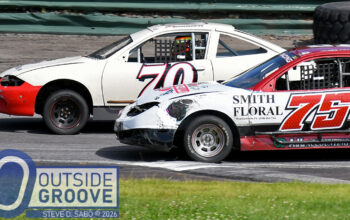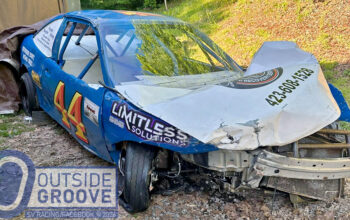

It took him four years, but finally Scott Velez has a new kidney. This Saturday, he’ll return to the seat of his sport compact at Newport Speedway.
In 2021, doctors informed then-17-year-old Velez his kidneys were failing and encouraged him to get word out about finding a living donor. He spread word via his race car, social media, flyers, and made four appearances at the Outside Groove Racing Show.
“God Bless John [Ackley, Outside Groove Racing Show promoter] — I met him at 411 Motor Speedway,” Velez, of Newport, Tennessee, said. “He offered to do an article. He contacted the National Kidney Foundation and said they would do a show with me. Our goal was to inspire others through kidney awareness — to help other people learn about this silent killer.”
(For more about his journey, read “Scott Velez: Racing in Search of a Kidney.”)
As time went on, his kidneys got weaker, and Velez needed to go on dialysis to survive.
“Early in the year, the UT Medical Center called and said they knew I was waiting for a long time for a kidney,” said Velez. “They said I should be interested in the Alliance for Paired Kidney Donation. I made the contact.”
Paired kidney donation often expedites the process of finding a kidney. It works in the following fashion. If someone wants to donate their kidney to a specific recipient, but is incompatible, the program helps find another compatible living donor who also wished to donate a kidney to a specific recipient but was incompatible to that person.
“My fiancée, Kinsey, posted that I needed a kidney,” Velez said. “A realtor in Greeneville, Tennessee shared her post. Someone responded that they wanted to share a kidney, but come to find out, I was not compatible, but another person in need was. Then another donor came forward and we arranged a three-way exchange of kidneys.”
In May, the UT Medical Center gave Velez about a day to prepare. The kidney flew commercial, from Utah to Nashville to Knoxville. Soon after surgery, Velez knew what he wanted to do when he returned back to health — go racing.
“I was cleared by doctors to drive after three months of recovery,” said Velez. “I feel great. I’m not hurting. I told myself, ‘Let’s do it,’ and, ‘Let’s at least try.’ Am I worried? To be honest, yes, I am.”
Velez’s concerns revolve around the safety of his one surviving kidney and taking anti-rejection medicine. He said he takes five capsules, two big pills, and two small pills exactly a 9 a.m. and 9 p.m. every day, to help ensure his body does not reject the donated kidney. Scott Velez feels he can make those times work, even if it requires a pit stop. He also made efforts to protect his new kidney.
“I’ve made some precautions, extra cushioning around the kidney area and a kidney belt, as suggested by a kidney support group,” Velez said. “I don’t want to kill my new kidney. However, I believe in living my life to the fullest — for me, that’s racing.”
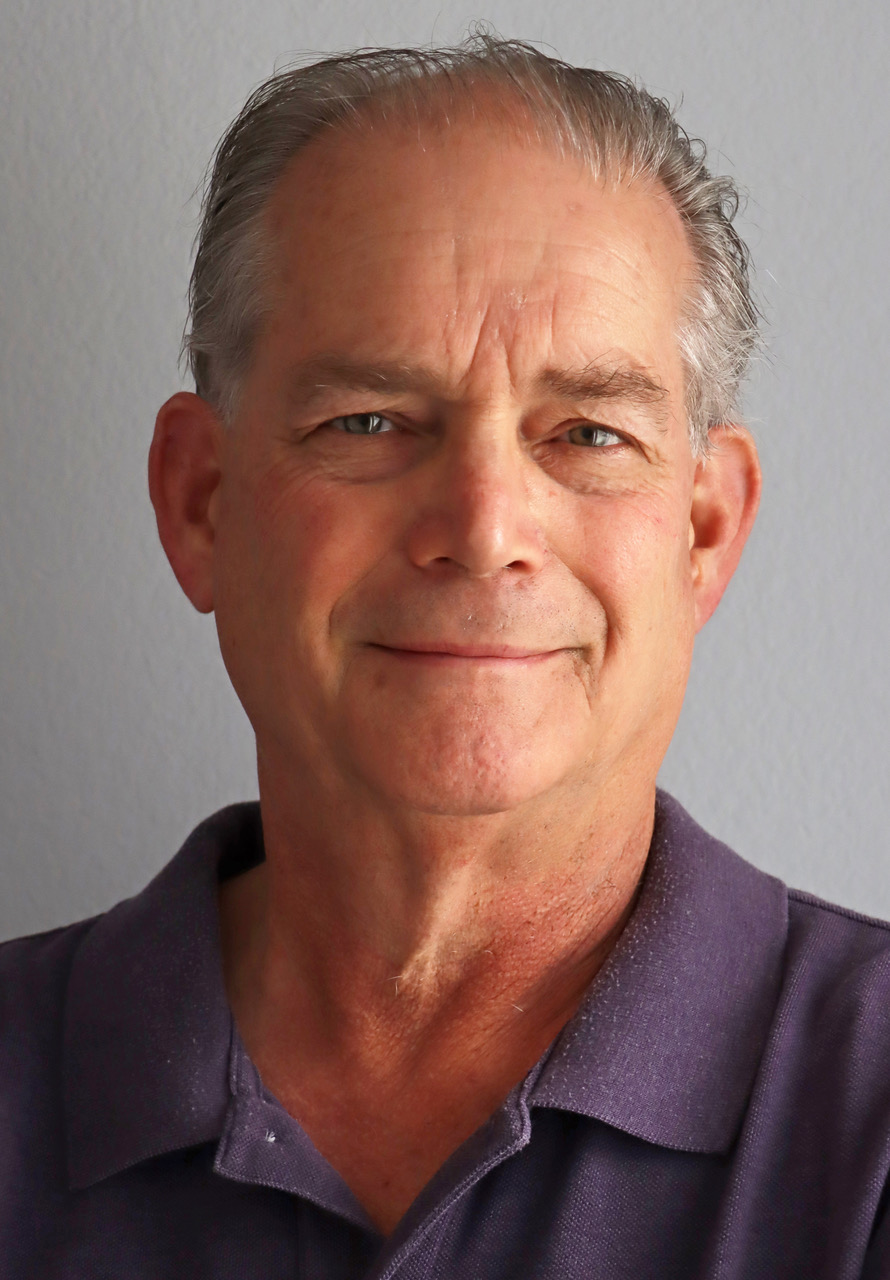
Mike Adaskaveg has written hundreds of stories since the website’s inception. This year marks his 54th year of covering auto racing. Adaskaveg got his start working for track photographer Lloyd Burnham at Connecticut’s Stafford Motor Speedway in 1970. Since then, he’s been a columnist, writer, and photographer, in racing and in mainstream media, for several outlets, including the Journal Inquirer, Boston Herald, Stock Car Racing, and Speedway Illustrated. Among Adaskaveg’s many awards are the 1992 Eastern Motorsport Press Association (EMPA) Ace Lane Photographer of the Year and the 2019 National Motorsports Press Association (NMPA) George Cunningham Writer of the Year.